Blog Village Quotes and Links

•July 19, 2012 • Leave a Comment

It is undoubtedly a struggle for me to post consistently (read weekly or even bi-weekly). I get my head stuck in the latest book I’m reading or the process of writing my fourth book or motherhood or just play internet-tiredness. I know it. I also know it competes with my growing desire to build what I am now at peace with referring to as “my brand”. Therefore, instead of castigating myself I have decided to launch a new component to the Diary of a Mad Reader. Namely, instead of simply posting quotes from books that resonate with me, I will be incorporating links to interesting blogs I come across. This is the first “issue” of that component.

Today’s theme: Enter the Hood – Parent and Mother

http://anjuellefloyd.com/2012/of-vipassana-abandoned-dreams-and-the-map-of-true-places/

I am dedicated to taking care of our daughters first such that when all three reach adulthood I can focus the majority of my attention on writing, and without regret of what I did not provide our children.

http://focsimama.wordpress.com/2012/03/27/the-terrific-twos/

We have decided instead of saying, “Terrible Two’s” they are now to be called “Terrific Two’s”!

http://radiantramblings.wordpress.com/2012/07/19/what-the-heck/

Can you identify THIS:


www.ashafullife.blogspot.com/2011/06/i-aint-skeered.html

This agnostic mom goes on a lot of adventures and I manage to get myself into some awkward spots.  The latest adventure involves me agreeing to be a co-leader to my daughter’s Brownie Girl Scout troop.
Yeah, I’ll pause so you can soak that in and say a prayer, light a candle or do whatever it is that you people do when you want to save a child’s soul.
Over the weekend, I was able to go on an excursion to Oklahoma City for an overnight training session.  I knew ahead of time I would be staying at the Catholic Pastoral Center.  I joked with my friend, Julia that I’d probably be struck by lightning or something.

Review: The Last Days of Ptolemy Grey

•July 18, 2012 • Leave a Comment


The Last Days of Ptolemy Grey
The Last Days of Ptolemy Grey by Walter Mosley
My rating: 5 of 5 stars

I thought about writing a review of this book but when I finished it, I read the back cover text and saw this quote by Edwidge Danticat. It says what I feel about it so aptly, there is no need for me to reinvent the wheel.

“A beautiful meditation on love, fraility, and old age…as much a page-turner as it is a heart tugger. It is a novel that stays with you.” Edwidge Danticat

View all my reviews


Parsley ~ Rita Dove

•July 9, 2012 • Leave a Comment

1. The Cane Fields
There is a parrot imitating spring
in the palace, its feathers parsley green.
Out of the swamp, the cane appears

to haunt us, and we cut it down. El General
searches for a word; he is all the world
there is. Like a parrot imitating spring,

we lie down screaming as rain punches through
and we come up green. We cannot speak an R-
out of the swamp, the cane appears

and then the mountains we call in whispers Katalina.
The children gnaw their teeth to arrowheads.
There is a parrot imitating spring.

El General has found his word: perejil.
Who says it, lives. He laughs, teeth shining
out of the swamp. The cane appears

in our dreams, lashed by wind and streaming.
And we lie down. For every drop of blood
there is a parrot imitating spring.
Out of the swamp the cane appears.

2. The Palace
The word the general’s chosen is parsley.
It is fall, when thoughts turn
to love and death: the general thinks
of his mother, how she died in the fall
and he planted her walking cane at the grave
and it flowered, each spring stolidly forming
four-star blossoms. The general

pulls on his boots, he stomps to
her room in the palace, the one without
curtains, the one with a parrot
in a brass ring. As he paces, he wonders
who can I kill today. And for a moment
the little knots of screams
is still. The parrot, who has traveled

all the way from Australia in an ivory
cage, is, coy as a widow, practicing
spring. Ever since the morning
his mother collapsed in the kitchen
while baking skull-shaped candies
for the Day of the Dead, the general
has hated sweets, He orders pastries
brought up for the bird; they arrive

dusted with sugar on a bed of lace.
The knot in his throat starts to twitch;
he sees his boots the first day in battle
splashed with mud and urine
as a solder falls at his feet amazed-
how stupid he looked!-at the sound
of artillery. I never thought it would sing
the soldier said, and died. Now

the general sees the fields of sugar
cane, lashed by rain and steaming.
He sees his mother’s smile, the teeth
gnawed to arrowheads. He hears
the Haitians sing without R’s
as they swing the great machetes:
Katalina, they sing, Katalina,

mi madle, mi amol en muelte God knows
his mother was no stupid woman; she
could roll an R like a queen. Even
a parrot can roll an R! In the bare room
the bright feathers arch in a parody
of greenery, as the last pale crumbs
disappear under the blackened tongue. Someone

calls out his name in a voice
so like his mother’s, a startled tear
splashes the tip of his right boot.
My mother, my love in death.
The general remembers the tiny green springs
men of his village wore in their capes
to honor the birth of a son. He will
order many, this time, to be killed

for a single, beautiful word.

Mind in the Waters by Joan McIntyre (excerpt)

•July 6, 2012 • Leave a Comment

There was a time in our culture, not long ago, when the essential role of men and women was to nurture and protect each other, to be the caretakers of life and earth. At that time, when the sun sparkled on the sea of our imagination as freshly as it sparkled on the sea herself, we thought of our world and each other in ways which were life-venerating and death-respecting. The porpoise school that weaves its history protectively around its common existence, the whales that tune body and mind in a continuous awareness of life, are not symbols of an alien mythology-they are evocative of what was once the core of human relationships.

Animals were once, for all of us, teachers. They instructed us in ways of being and perceiving that extended our imaginations, that were models for additional possibilities. We watched them make their way through the intricacies of their lives with wonder and with awe. Seeing the wolf pick his delicate way across the snowy forest floor, the eyes of the owl hold the image of the mouse, the dark shape of the whale break the surface of the sea-reminded us of the grand sweep and diversity of life, of its infinite possibilities. The connection of humans with totemic animals was an essential need to ally ourselves with the power and intelligence of hon-human life, to absorb some of the qualities bestowed by the evolutionary process on other creatures.

Whales and dolphins-all Cetaceans-are intensely interesting to us now. They seem to speak for a form of consciousness we are beginning to re-explore in our own inner natures. They help us chart our interior wilderness. We can hear whales singing. If we pay attention and let them live, perhaps we will hear them speak, in their own accents, their own language. It would be an extravagant reward to experience, by empathy, a different band of reality.

We are animals of the land. They are animals of the oceans. We have hands to move and mold the things of the earth. They do not. But with an intelligence imagined as grand as ours – what do they do? What can they do, with mind imprisoned in all that flesh and no fingers for releasing it?

I have stroked, and swum with, and looked at these creatures, and felt their essence rise to meet me like perfume on a spring day. Touched by it, I felt gentler myself, more open to the possibilities that existed around me. There may be only one way to begin to learn from them-and that is to begin. We would not be harmed by returning to the roots which once nourished us, which still, unseen, link together all life that lives, and feels, and things and dies, on this, our common planet.

Excerpted from Sisters of the Earth: Women’s Prose & Poetry about Nature

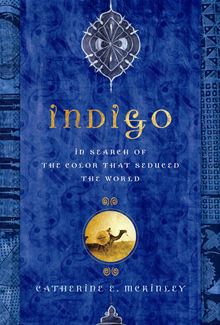
Indigo: In Search of the Color that Seduced the World (excerpt)

•July 1, 2012 • Leave a Comment

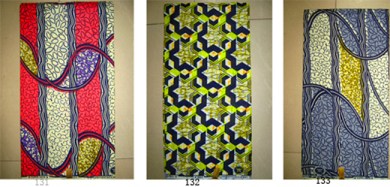
Living in the shadow of Elmina Castle, the first European building south of the Sahara, built in 1482 by the Portuguese and then occupied by the Dutch (and now a UNESCO World Heritage site for its importance in the transatlantic slave trade) was a small community of former Dutch army conscripts who had served in Indonesia. These men, part of three thousand ‘Donko’ slaves-the lowest caste of captives of the Ashanti empire-were sent to Indonesia from 1810 to 1840 under a system of de facto slavery. These men eventually bought their freedom with army service and resettled in Elmina beginning in the 1820s in a close-knit community of relatively elite ‘Old Javanese’ pensioners. They flew the Dutch flag, spoke Malay as a  common language, and put themselves at the disposal of the government, making expeditions into the interior. They dressed in Javanese cloth; the wrapped and togalike draped clothing of Akan men of the Gold Coast was not too dissimilar from Indonesian dress styles. These men’s lives have been little documented, but they are also partly responsible for Vlisco’s influence in West Africa.

The slave trade effectively ended in 1841, persisting for thirty years after its abolition under the 1814-1815 Vienna Congress. Profits from the colonial cloth trade had nonetheless grown so significant that the marker persisted long after the abolition of slavery. By 1876, when Vlisco began formally shipping cloth to the Gold Coast and concertedly pursuing and African market, they were extending the profits from goods that had long been exchanged and stored alongside captives in the holds of the coastal forts. Inside of Elmina Castle, the wrought iron railing to the main building bears a W, presumably for King William I, the Dutch king who sponsored the three factories that were the backbone of the Indonesian cloth trade, eventually inherited by Vlisco. Knowing this history put a new order to my thinking.

In the 1920s and 1930s Vlisco began a process similar to the Indonesian one with West African cloth designs. These cloths often incorporated traces of Indonesian designs, and ‘Java’ designs themselves became an expensive category of cloths sold in Africa.

In the Woodin window there was also a display of neon pink and blue and red ‘Angelina’, the iconic , usually dark green dashiki cloth emblematic of 1960s and 1970s Black and African identities and Black liberation struggles throughout the globe. It long predated the dashiki era and was one of the earliest ‘Java’ prints to be traded; ironically, the design had been inspired by Coptic patterning.

I kept thinking about Ghanaian women’s dressed and the ‘100% Guaranteed Real Dutch Wax’ stamp on the selvage, always-until the late 1960s, when the sepias and other colors were introduced-a crackling line of beautiful blue. Most women choose to display this selvage rather than fold it into their hemlines. Some of the most expensive ‘Super Wax’ cloths even feature the Vlisco logo as centerpieces to their designs. I had once read about an Alabama slave owner, a man named T. H. Porter, who made his chattel wear buttons with his name stamped into them. Buttons-much less custom designs-were such a relative luxury in Porter’s era, and slaves were afforded few or none. The arrogance of this requirement, the sick vanity, always stayed with me.

Ghanaian and other West Africans wear colonial and slave history in bright, intoxicating displays every day. In fact, the very measure of the cloth evokes the measure of a captive person’s life.

INTERVIEW: Amiri Baraka: Djali Dialogue – Advice To Young Writers

•May 20, 2012 • Leave a Comment

Amiri Baraka addressing the Malcom X Festival ...

Amiri Baraka addressing the Malcom X Festival in San Antonio Park, Oakland, California (Photo credit: Wikipedia)

The quote below is excerpted from an interview Kalamu ya Salaam did with Amiri Baraka.

ya Salaam: It’s one thing to have that sense, and it’s another thing to have the technical facility to put that sensibility on the page.

Baraka: Practice. Practice. Practice. I think that’s the only thing you can do. Like my grandmother said, practice makes perfect. To do anything you have to practice. You have to do it. If you don’t do it, you won’t do it. You can’t be a writer in your head, just like you can’t play the piano in your head. I’m the meanest piano player I know–in my head. I can play some piano in my head, it’s just when I get to the piano it gets difficult. You have to work at it.

And then I think, young writers, you have to get to the point where you start grading your work. At first when you start doing it, everything is great. Everything you write is valuable and you must (mimics holding stuff to his chest), this is my work, this a poem I wrote in nineteen-whatever. That’s normal but you have to work through that and get over that. I’m not saying get to the point where you think your work is expendable, but get to the point where you can grade it.

You know the worse thing you can do is write a “you-poem.” Nobody can imitate you like you. I can write a hundred poems that I write, but those are “you poems.” Those are poems using the things that you know are you. Once you become practiced in writing then you have certain skills that you can put a poem together, but the point is that it won’t have any substance to it. There won’t be any moving, there won’t be any life in it, any heart in it, cause you can imitate yourself.

The whole point of developing the skill is so that the words fly on the rhythm. You feel the rhythm before you know what you’re talking about. If you trust the rhythm and you’ve worked so that you don’t have a lot of dumb stuff in your mind all the time. (Laugher.) No, it’s true, because you might want to write about McDonald’s boxes, I don’t know. That’s why Mao says–and this is very important–when we look at your work we can tell what you love and what you hate, what you celebrate and what you put down, and we can also tell what work you’re doing and what study you’re doing. We can tell what you’re concerned with, we can tell by your writing, what you know and what you don’t know.

Now, the lyric poet is, of course, the great hidden personality of our time. They can write about “I”–I feel, I want, I do, I am–and really be hiding the world because all they’re talking about is this great vacuum in my heart that must be filled by, I don’t know, ice cream cones, a walk down the street, another person. You know what I mean, it could be anything? That’s the lyric “I”–I want, I need. But actually to begin to talk about who is I and where is I in the world among all the other I’s, and how that relates to a real objectively existing world that exists independent of us. The world exists independently of us–if you can get that in your mind. The world does not depend on you to exist, it exists independent of you. That’s hard sometimes, because we’re so subjective, especially we great artists, we think the whole world is in our heads. It’s not. The world exists independent of your will. Things will happen you don’t want to happen. How did we get here?

That point of writing past the preservation of everything, being able to grade your work–you know what I mean, being able to tell the fake from the true–and of getting past imitating yourself, those are important things.

Also, going back to Mao Tse-Tung. You ever read the Yenan Forum written in 1941? Mao was trying to build the communist party and one of the things he was talking about was intellectuals. What is the role of the intellectual? What is the role of artist in making social transformation? Now, if anybody needs to know that it’s us. That is what Yenan is about. The first question he asks: for whom does one write? Who are you writing for? Why are you interested in writing? Is it to titillate your own compulsive personality? What is it for? That’s a good point. Think about it sometimes. Once you begin to isolate “for whom” then you also know “what it is.” How do I explain what has gone down in this world for us?

So, when people be going up to me and saying Baraka you always political, I say why do you want me to be different from. You want me to be different from Baldwin, you want me to be different from Lorraine Hansberry, you want me to be different from Langston Hughes, or DuBois? Who should I get away from? Our tradition is intensely political. And for this recent group–and I’m not trying to categorize you in age terms–but for this recent little group of buppies that they’re publishing who think that somehow writing is not a political act, that always has been around but it’s something that Black people and indeed the people of the world have flogged.

Anyway, that’s a very important question–for whom?–because for whom answers why. You want to know for whom, look at your work. Who does it celebrate, who does it put down, who does it think is beautiful, who does it think is ugly, what work are you doing, what study? We can see it in there. We don’t have to ask you nothing, you give me your poetry or literature, I read it and I know a lot about you just from reading that. You could be writing about something you think is totally disguised, don’t have nothing to do with your life, you could be writing about Johnny Jojo way over there in Nobo land, you know, but it bees about you. That’s what it bees about. Why? Because that’s all you know about. It bees about us.

That’s another thing, a lot of people get frightened at; once they know that people know that when you write something, it’s about you, Jim, it ain’t about that one, it’s about you, then people get constipated. They don’t want to expose themselves. People be saying, I don’t know how he could write that book, Baraka you… hey, what I care. You be dead in a minute, people will read it–I always thought that if you felt strongly about a thing then you would face it.

For me, I had come out of a lil petite-bourgeois family, my mother was a social worker, my father was a postman, they always told me: y’all, are the smartest colored kids on the planet. They gave me piano lessons, trumpet lessons, drum lessons, piano lessons, painting lessons. I used to sing Ave Maria with my sister. I used to recite the Gettysburg Address every Lincoln’s birthday in a Boy Scout suit for about six years–this was my mama. The point is that for them two Negroes right there, they knew what they were going to do, they were going to give us all the information in the world, and they was going to equip us to go out and fight the White people. That’s where my people were coming from. Why? Because they wanted that. You were fighting for them. I never knew that, I never understood what they had planned for me until one night when the White people came–I had this play, Dutchman, and all of these papers, they were calling me names and all kinds of things, stupid, crazy, evil, but I could see that they were going to make me famous.

The minute that came to my mind that they were going to make me famous, I said, now, I’m going to pay your ass back. (Laughter.) Naw, it was very clear. It was like, bump. I could see how my mama had put the shell in there. Click. Right. Oh, you gon make him famous, I got some shit for you. That’s what it was, it was like you had been doctored on by masters. You understand? Every night at dinner, they’d be running it. You’re sitting there eating biscuits and what not, and they would be running it. They would be telling you the history of the south, the history of Black people, the history of Black music and you would be sitting there. They were actually teaching you. But I didn’t know that then. My grandmother would tell me all the time about this Black boy they accused of raping this woman and they cut off his genitals and stuffed them in his mouth and then made all the Black women come there and watch. My grandmother told me that story when I was a little boy. Why would your grandmother tell you that story? Because she wanted you to remember that shit forever. You understand? Sweet little old lady from Alabama would sit you down, give you something to eat, and tell you this horrible story, and then you trying to figure out: why would she tell me that story? Why would she tell you that story? Oh, you still know the story, you still got it in your mind, sixty years later, you still remember that story?–“yeah, I remember it”–in detail?–“absolutely”–well that’s why she told it to you.

I don’t know if y’all still have that in your homes, I can’t speak on that, but I know that is what we as writers have to do, continue that tradition. The only way I can see that tradition being extended is through the role and function of the writer in the community.

To read the entire interview, click here

Decolonizing the Mind – Ngugi wa Thiong’o

•May 4, 2012 • 3 Comments

Official languages in Africa Afrikaans Arabic ...

Official languages in Africa Afrikaans Arabic English French Portuguese Spanish Swahili other African languages (Photo credit: Wikipedia)

From the chapter The Language of African Literature:

[…] African languages refused to die. They would not simply go the way of Latin to become the fossils for linguistic archaeology to dig up, classify, and argue about the international conferences.

These languages, these national heritages of Africa, were kept alive by the peasantry. The peasantry saw no contradiction between speaking their own mother-tongues and belonging to a larger national or continental geography. They saw no necessary antagonistic contradiction between belonging to their immediate nationality, to their multinational state along the Berlin drawn boundaries, and to African as whole.  These people happily spoke Wolof, Hausa, Yoruba, Ibo, Arabic, Amharic, Kiswahili, Gikuyu, Luo, Luhya, Shona, Ndebele, Kimbundu, Zulu or Lingala without this fact tearing the multinational states apart. During the anti-colonial struggle they showed an unlimited capacity to unite around whatever leader or party best and most consistently articulated an anti-imperialist position. If anything it was the petty-bourgeoisie, particularly the compradors, with their French and English and Portuguese, with their petty rivalries, their ethnic chauvinism, which encouraged these vertical divisions to the point of war at times. No, the peasantry had no complexes about their languages and the cultures they carried!

In fact when the peasantry and the working class were compelled by necessity or history to adopt the language of the master, they Africanised it without any of the respect for its ancestry shown by Senghor and Achebe, so totally as to have created new African languages, like Krio in Sierra Leone or Pidgin in Nigeria that owed their identities to the syntax and rhythms of African languages. All these languages were kept alive in the daily speech, in the ceremonies, in political struggles, above all in the rich store of orature – proverbs, stories, poems and riddles.

Mothers of the Revolution: The War Experiences of Thirty Zimbabwean Women

•May 1, 2012 • 2 Comments

Seri Jeni:

It was after this [the removal of the population from areas where they supported the freedom fighters]  that one of my children joined the struggle. What happened was that she woke up early in the morning and got ready the various things he used to sell. Then she changed into a denim dress, underneath which she wore a jersey and she put her brother’s baby on her back, saying that she was going to the township. She left the keep and then gave her little brother the baby. She said, “Bye-bye, we shall meet again some day.”

At the end of the day, as it grew dark, I asked my other children where she was. The little boy said she had told him that she was going to the shopping centre but that as she left, she had said, “Bye-bye, we shall meet some day.” She never returned.

I did not sleep that night. I felt very worried and powerless. THe following morning I told my husband that our child had disappeared and he said that I should have told him before, so that he could have reported it. After a week some men arrived to say that their son wanted to marry my daughter. My husband was very annoyed because he thought that meant that they knew where my daughter was. He wanted to beat them but my brother-in-law stopped him.

After that the police regularly came to my house to ask about my daughter. They said that we were looking for a child who was long dead. They said that they had seen her go and that she had been killed immediately.

This was untrue. She went and fought in the war. It was a painful to think about. When a person was killed, the security forces hung the dead body on a chopper and every time this happened, I thought it could be my daughter. I had no happiness for thinking about my child. Each time I heard that comrades had been killed in such and such a place, I thought she could be one of them. I was very worried. She was my fourth born child and she had been very interested in the war and had often gone to the base: many children did. They simply told the guards on the keep gate that they were going to the township. It was three years before I heard about my daughter again.

Excerpted from Mothers of the Revolution:

Mothers of the Revolution tells of the war experiences of thirty Zimbabwean women. Many people suffered and died during Zimbabwe’s war of liberation and many accounts of that struggle have already been written. But the story of the women, the wives and the mothers who remain behind, has not yet been told.

Related Links:

Mothers of the Revolution (Saying Yes)

The book @ Amazon

Poetry: Letter to an Archaeologist ~ Joseph Brodsky

•April 29, 2012 • 1 Comment

Citizen, enemy, mama’s boy, sucker, utter
garbage, panhandler, swine, refujew, verrucht;
a scalp so often scalded with boiled water
that the puny brain feels completely cooked.
Yes, we have dwelt here: in this concrete, brick, wooden
rubble which you now arrive to sift.
All our wires were crossed, barbed, tangled, or interwoven.
Also: we didn’t love our women, but they conceived.
Sharp is the sound of the pickax that hurts dead iron;
still, it’s gentler than what we’ve been told or have said ourselves.
Stranger! move careffuly though our carrion:
what seems carrion to you is freedom to our cells.
Leave our names alone. Don’t reconstruct those vowels,
consonants, and so forth: they won’t resemble larks
but a demented bloodhound whose maw devours
its own traces, feces, and barks, and barks.


Excerpted from Joseph Brodsky: Collected Poems in English

Loving Black Masculinity – Salvation – bell hooks

•April 27, 2012 • 3 Comments

All the single mothers, black and nonblack, who raise healthy sons who later become mature, responsible men capable of giving and receiving love know that it is a lie that only men can raise sons. Patriarchal culture currently seeks to devalue single mothers by insisting they cannot raise healthy sons, even though there is no documentation to show this truth. All the data we have available  documents the fact that loving single mothers can and do parent sons who are as healthy as those in two-parent households. Dysfunctional households rarely produce psychologically healthy boys whether they are single- or two-parent households. When the focus is on black life and the parenting of boys, mainstream culture likes to insist that only black men can raise healthy boys. Underlying this insistence is the assumption that these boys need coercive discipline which only a black male authority figure can give. All these assumptions about the needs of black boys are informed by racist and sexist stereotypes which identify these children as dangerous threats to the safety of everyone else, whose spirits must be tamed or broken early in life. Tragically, more and more black people endorse and support this line of thought. No public leaders talk about  black boys needing healthy love, which necessarily includes teaching children how to be disciplined along with other life-enhancing skills.

Whose interest does it really serve to instill in the public’s imagination that only black men can raise a healthy black male child in a society where so many black males refuse to engage in parenting. Following this logic would lead to the assumption that all black males raised in female-headed houses are unhealthy and dysfunctional. Certainly such thinking does not serve the interests of black boys or the women who provide them with parental care. While it is clear that black boys, and all children, need positive connections with adult men, those men do not have to be fathers. It is also clear that a woman alone can raise a healthy boy child.  For too long, single mothers of all races have been made to feel that the lack of male parental influence is their fault. No one has prevented black males or any group of males from parenting their children. There is no evidence to support the notion that healthy mothers try to keep healthy fathers away from sons or daughters. The hard truth that this nation does not want to face is that most patriarchal men, irrespective of their racial identity do not wish to be loving, parental caretakers.

bell hooks, salvation